Get off your a**
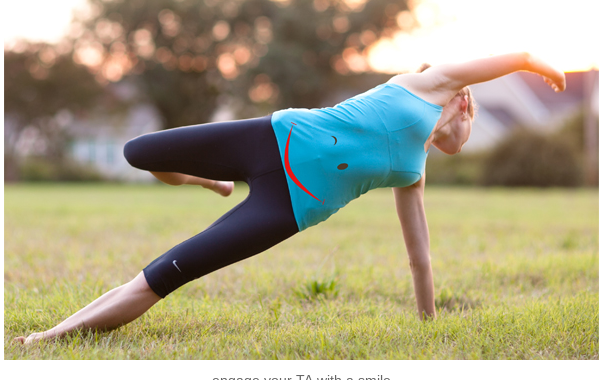
The Importance of Tranversus Abdominis During a Pilates Session and How to Engage your TA with a Smile 🙂
How often do you smile? Hopefully you can take a second to smile right now because a simple smile will
It is important to smile during a Pilates session because we do Pilates to have fun and enjoy the freedom of movement. Of course, you might not be in a smiling mood when you are doing some of the exercises , but you will definitely smile once you are done. Now take a second to smile right now. How does it feel? Now think about your stomach smiling. Wondering what I am talking about ?
If you’ve been doing Pilates, you may know about the importance of the Transversus Abdominis (TA) muscle. It’s one of the 5 major core elements that is essential for good posture, proper body mechanics, support of your internal organs and a flatter-looking stomach. Any abdominal work that bypasses the TA muscle uses only superficial abdominal muscles and may do more harm than good if you feel it in your back instead of in your abs.
Most Instructors will cue the TA muscle. When you are first introduced to Pilates it is hard to find this muscle by simply tightening your abs or feeling the contraction of this muscle. People who have undergone any abdominal surgery as well as women after deliveries find connecting to the TA rather challenging. However, going through a workout without engaging this deep abdominal muscle is a faulty technique that won’t bring you the results you are looking for.
When we engage only external abdominal muscles , Rectus Abdominis (the “6-pack”) and External Obliques we put inadequate pressure on our abdominal organs and especially the pelvic floor organs. You can check whether you are engaging the external abdominal muscles by doing a simple crunch. Put your hands on your stomach and lift up. Do you feel your abdominal muscles bulging up under your fingertips? If you do then you are using your external obliques and letting your TA muscle relax – somewhere on the beach with a Pina-Colada?
You will hear instructors use the cues like “pull you navel to your spine” or “scoop your tummy in” which makes you activate your external abdominals – that is Ok when you want all your muscles to come to the party – but firstly your instructor wants you to engage your deep core muscles
Poor ab work can be compared to squeezing a toothpaste tube from the middle.
To visualize what’s happening when you activate your abdominals incorrectly, think about what happens when you squeeze a tube of toothpaste from the middle instead of squeezing from the bottom up.
Squeezing from the middle not only makes a mess, but eventually, if you were to squeeze it hard enough, would cause the toothpaste to squirt out the bottom.
The toothpaste represents your internal organs and the bottom of the toothpaste tube is your pelvic floor.
Your pelvic floor muscles are located at the bottom of your pelvis and both men and women have them. They close up the hole at the bottom of your pelvic bones and prevent your internal organs from falling out through the bottom of your pelvis.
The loss of the TA connection can be particularly damaging to women who’ve been through pregnancies as it puts extreme pressure on the already weakened muscles of the pelvic floor. It’s also bad news for those experiencing Diastasis Recti (separation of Rectus Abdominis.)
How to Engage Your TA Muscle
Do you remember that smile in the picture at the beginning? Let’s get back to it.
As I’ve mentioned before, engaging your TA muscle can be a little tricky but thankfully it responds really well to visualisations and breathing. Imagining a smile across your hip bones is a great way to wake up your TA. Think of the area about four inches below your belly button and above your pubic bone. Imagine a tiny smile starting in that area and visualise the smile corners growing wider and then curling up towards your hip bones. You’ll need to hold this ‘smile’ gently in and up and breathe into your rib-cage three-dimensionally.
In order to get the benefits of Pilates, what really makes a difference, are the small changes that you can do to your alignment and the deeper connection that you can develop with your body.
Take 5 minutes today to practice the Stomach Smile. As you are working on your tummy smile don’t forget to let your face smile too. You’ll be doing two great things at one time while working on the ultimate mind-body connection.
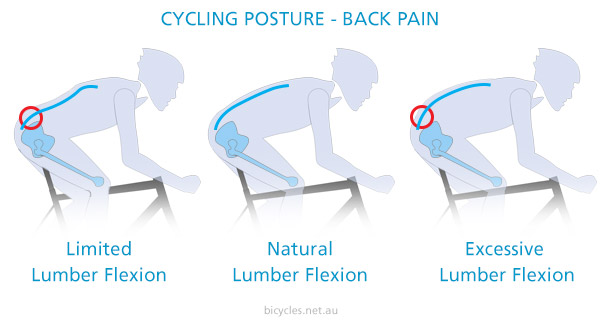
Its not the ‘condition’ of your body its the ‘position’
Its not the ‘muscles’ its the ‘movement’.
Extracellular matrix: connective tissue; tendons ligaments, cartilage, fascia (scaffold of the body)
Core is circular or cylindrical
Proprioception is the balance between nervous and musculo-skeltal systems. After injury it is altered. Like looking a computer screen, the wrong key gets pressed ant you end up somewhere else.
Pilates makes me happy.
Joseph Pilates said “Physical fitness is the first requisite of happiness”. It’s true. I have never felt sad after a session . Once I have moved through some old stuff in my mind I come out the other side feeling better and happier after . Being with other people in a group environment or with someone on one, where we share a lovely movement experience, whether at beginner level or advanced, it brings me joy. The sense of belonging and community, he feeling of improved posture, greater understanding of how your body works, strength through your core and freedom through your joints, leaves me feeling pretty good about life.
The Pilates method was created by Joe Pilates with aspects of many other types of physical activity in mind: yoga, acrobatics, Tai Chi, and gymnastics, to name a few.
All of the principles are equally important and are to be practiced simultaneously throughout your workout, and eventually in other activities that you do.
These principles can and should be applied to any movement or physical activity.
It may seem like a lot to think about at once, but the streamlining of all these principles does take practice and repetition. But even just noticing and keeping them in mind can be a step towards safer and more controlled movements.Try to keep these in mind as you go about even the smallest movements (not just official “exercise”) during the day.
Pilates is a system of exercises meant to stretch and strengthen your muscles at the same time. In order to do this, there must be a central place for the strength and stretching to come from. Joe Pilates called it the “powerhouse”.
The powerhouse includes abdominal muscles, your spine, shoulder blades, lower back, rib cage, hip muscles.
It is important that before the start of each exercise that your body is in the correct alignment. You will be taught how to set-up for the exercises and find ‘neutral’ spine. The challenge is to maintain your alignment during the exercise by engaging your ‘core’ muscles.
Strength in the limbs is really not worth much if the limbs are not anchored to a solid foundation.
Only with this sense of anchoring or drawing inward towards the core is it possible to experience freedom, expansion and flexibility in the peripheral muscles.
Think of the muscles of your core like the roots of a tree: the stronger and deeper the roots, the more freedom and flexibility are possible for the trunk and branches because they have a strong foundation.
Your body works the same way.
A good balance of flexibility and strength is ideal, and it all begins with awareness of centre
Correct breathing is so underrated!
We inhale and nourish our blood with oxygen; we exhale in order to rid our bodies of toxins and unnecessary carbon dioxide.
Most of us take it for granted and very rarely think about how we breathe, even when exercising.
Every movement in the Pilates method is purposefully coordinated with a breath in order to cleanse the blood.
Holding the breath or forgetting to breathe will happen at first, but it is not a good habit to get used to! Practice keeping your breath moving.
Full, functional breathing also involves awareness in knowing where you breathe. Allowing your breath to expand throughout your body can offer freedom and space in your movements.
For example, do you inhale only into the front of your chest, or can you let your breath fill up your back ribs as well? Can you allow your rib cage to expand out to the sides? Can you engage your abdominal muscles and still take a deep breath into your lungs?
Imagine filling up your lungs in all directions, and allowing your spine to lengthen and expand with your inhale, and relax (but not collapse) on the exhale.
Pilates helps to stretch and strengthen the muscles that will help maximize the quality of your breathing.
You will find that the ability to breathe fully and freely will increase your lung capacity, make your movements feel much easier, and can even help you to feel more mentally alert and energized.
Even when the movements in Pilates (as well as dance, gymnastics, or other sports) look as if they are done so quickly that body parts are being thrown about, there is a great amount of control involved from the mind as well as many muscle groups.
This control is precisely what makes it look easy! As well it prevents injuries and builds the potential to create more freedom in other areas. Even the movements that you make in between exercises should be made mindfully and with control.
An hour of Pilates often flies by. One of the things I love about Pilates is that it is so mentally engaging. There is no time to zone out. Things like talking on your phone, reading the newspaper, listening to headphones or watching TV would take away from the concentration that you need to really connect your mind with your body. With Pilates you do relatively few repetitions but the idea is to get the best out of each one.
Your body needs concentration and attention to fully focus on the quality of your movements.
The transitions between exercises are as important as the exercises themselves, and should be performed with as much attention and care no matter how easy or simple it may seem.
Fluidity makes a Pilates session more of a vigorous workout by moving continuously for up to an hour.
The reason for this principle is because this is how we move about in our daily lives.
Our bodies are designed to move from one physical demand to another. We do this constantly even if we don’t realize it. Many injuries happen when we carelessly transition from doing one movement to another.
Keeping fluidity in mind during Pilates sessions challenges us to be mindful of such transitions.
This is huge! You will find that many Pilates exercises don’t feel anything like what you expect them to feel like based on what the movement looks like. I always say to my groups that anyone looking in us would think that we were doing really easy stuff. If you find Pilates easy you’re probably not doing it right ! Getting the deep muscles to work is key! Don’t worry about how you look when you do the exercises. It’s far more important to feel the movement coming from the right place and to keep the other principles in mind during your workout rather than just make the shape of the exercises.
Alignment and muscle tone play a tremendous part in the prevention of injuries.
When practicing Pilates, it is as if you are “teaching” your body to be placed and engaged properly. When your body is positioned correctly, muscle tension, and pressure on joints and ligaments is reduced.
Precision gets results.
This is an unofficial principle, but is added to the list because it is a challenge
Many students of Pilates, both new and experienced, find it hard to only use the muscles that are needed for any given activity or movement.
They unconsciously contract unnecessary muscles and this creates a sense that an exercise is far more difficult than it really is.
Let’s be clear, we all do this when we are working hard and/or learning a new movement. It’s part of the process of learning how to move differently. Most people are trying so hard to do the exercises correctly that they usually are not even aware that they are doing it. Once they are aware, they can start to relax and use the important muscles more.
Try to take note of your habits and ask yourself: “Are my jaw muscles and tongue relaxed?”, “Are my eyes and eyebrows relaxed?”, “Am I breathing?”, “Are my hands loose?” “Are my shoulders toned but not tense?” and so forth.
It definitely takes some practice to have all of these principles happening at the same time. So have fun working on it!
When you know these principles and keep them in mind, your Pilates practice will have more meaning to you and the exercises will start to make more sense. Some days you might pick just one principle to work on for the session. One of the reasons I love Pilates so much is that, because of these details, I always find it to be a challenging, energising, adaptable, progressive, regressive, customisable COMPLETE workout.
 Angela Williams Mat Pilates groups